





Semi Reportedly Attempting a U-Turn Jackknifes Across Highway 138 Near Lone Pine Canyon Road, Leaving a Pickup Driver Dead
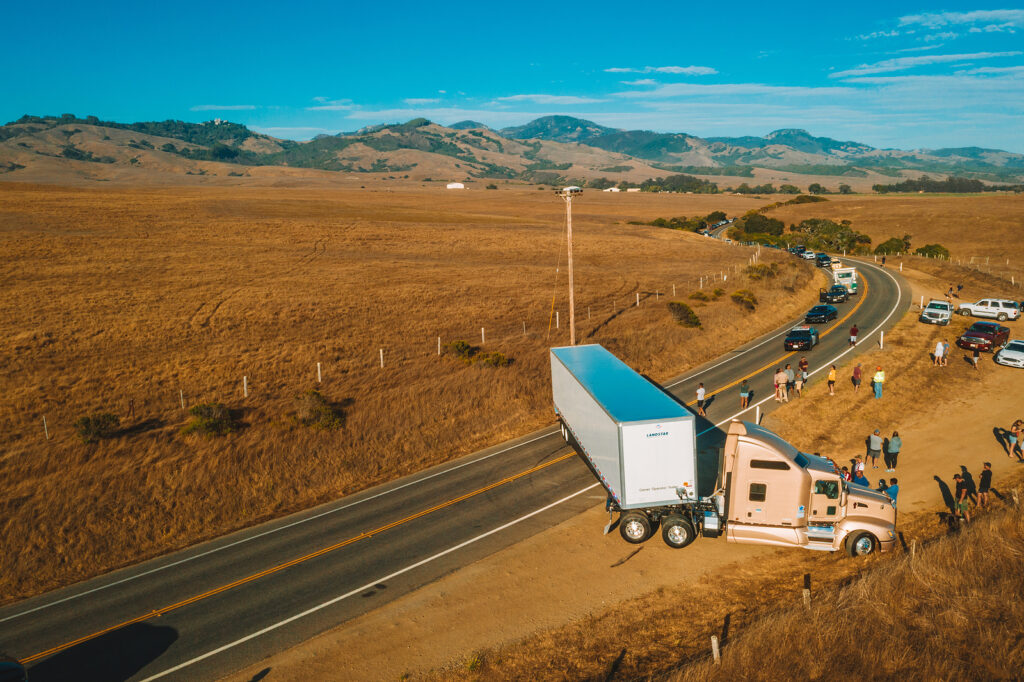
PHELAN, CALIFORNIA (November 24, 2026) – A pickup truck driver was killed in a truck accident involving a semi tractor-trailer on Highway 138 near Lone Pine Canyon Road in Phelan.
San Bernardino County officials are saying that the crash occurred around 3:31 a.m. on Friday. The driver was behind the wheel of a black Chevrolet Colorado on Highway 138 in the Mormon Rocks area when a semi tractor-trailer that was reportedly attempting a U-turn jackknifed across the highway.
Preliminary reports indicate the trailer’s brake lines may have come loose, and the pickup driver had no time to stop before striking the side of the trailer. A white pickup truck then collided with the semi, and California Highway Patrol officers and San Bernardino County firefighters were called to the scene.
Crews worked to free the driver of the Colorado, who was pinned against the trailer. Paramedics found the pickup driver unresponsive, and the driver was pronounced dead at the scene.
It was not immediately clear whether anyone in the white pickup was hurt. The CHP issued a SigAlert that closed both directions of Highway 138 for more than three hours, and the coroner’s office is expected to release the driver’s name after notifying next of kin.
Liability for Phelan Truck Accidents
Under Civil Code section 1714, everyone in California is responsible for injuries caused by a lack of ordinary care in managing their property or person. The Vehicle Code adds specific rules for turning. Section 22107 bars any driver from turning or moving right or left on a roadway until the movement can be made with reasonable safety and after an appropriate signal. Section 22105 prohibits U-turns on any highway where the driver lacks an unobstructed view of 200 feet in both directions. When a commercial truck is involved, responsibility can reach well beyond the person behind the wheel.
- Safe Turns: Truck drivers must judge whether a long rig can complete a turn without blocking lanes approaching traffic cannot see in time.
- Visibility: A trailer stretched across a dark highway can be hard to see, which makes lighting, reflective markings, and warning signals critical.
- Maintenance: Carriers must keep brakes, air lines, and couplings in safe working condition and document regular inspections.
- Employer Responsibility: A trucking company can answer for a driver’s on-the-job negligence and for its own hiring, training, and supervision decisions.
- Evidence: Electronic logging devices, engine control data, dashcam footage, and inspection reports often show what a truck did before a collision.
Courts treat a truck driver’s choices about where to place a rig near a highway as a matter of reasonable care. In Cabral v. Ralphs Grocery Co. (2011), the California Supreme Court reviewed a case in which a grocery company’s driver stopped his tractor-trailer on the dirt shoulder of Interstate 10 for a snack, and a pickup driver who veered off the freeway struck the trailer and died. A jury assigned part of the fault to the truck driver, but the Court of Appeal ruled the company owed no duty at all. The Supreme Court reversed, holding that drivers must use reasonable care in deciding whether, when, and where to stop alongside a freeway because collisions with trucks positioned there are generally foreseeable. Whether that care was met is a question for the jury.
Side Underride and the Danger of Tractor-Trailer Crashes
Large trucks pose an outsized threat to everyone else on the road. According to NHTSA data, 5,340 people were killed in traffic crashes involving large trucks in 2024, and 70 percent of them were occupants of other vehicles. Among the deadliest are side underride crashes, in which a smaller vehicle slides beneath a trailer and bypasses its own crumple zones and airbags. The Insurance Institute for Highway Safety estimated in 2023 that requiring side underride guards could prevent 159 to 217 passenger vehicle occupant deaths each year. Several practical safeguards can reduce that risk.
- Side Guards: Rigid guards mounted along a trailer’s sides can stop a car from sliding beneath it, and one held up in a 40 mph IIHS test.
- Conspicuity: Reflective tape and working marker lamps help other drivers recognize a trailer’s length and position after dark.
- Route Planning: Using interchanges and truck stops to turn around avoids risky maneuvers across live lanes.
- Pre-Trip Inspections: Checking brakes, tires, lights, and coupling systems before every trip catches problems before a truck reaches the highway.
- Night Driving: Slowing down on unlit rural highways gives motorists more time to react to large vehicles ahead.
Federal rules still do not require side underride guards on trailers. That leaves responsibility with the carriers and drivers who decide how trucks are equipped and operated. When those decisions fall short, the people hurt and the families of those killed have the right to seek accountability and a full account of what happened. California law allows survivors to bring claims against every party whose negligence contributed to a death. Their persistence often drives safer industry practices.
Investigating Truck Accidents in Phelan
We at Samer Habbas & Associates PC extend our deepest condolences to the family of the pickup driver who died on Highway 138 in Phelan. We hope this tragedy brings accountability and changes that keep large trucks from blocking highways in the dark. This incident raises serious safety concerns. What should stop a tractor-trailer from attempting to turn around on a dark stretch of Highway 138 where approaching drivers have little time to react?
Have you or a loved one been affected by a semi-truck or pickup accident in Phelan or elsewhere in San Bernardino County? There are a number of laws designed to protect your rights. Our team of accident investigators is here for you. We are committed to helping victims understand their rights and holding negligent drivers fully accountable for their misconduct. You can rest assured that we will do everything in our power to figure out what went wrong. Whether you just have legal questions or need any other type of assistance, we are here for you. You can reach out to us anytime at 949-727-9300.