






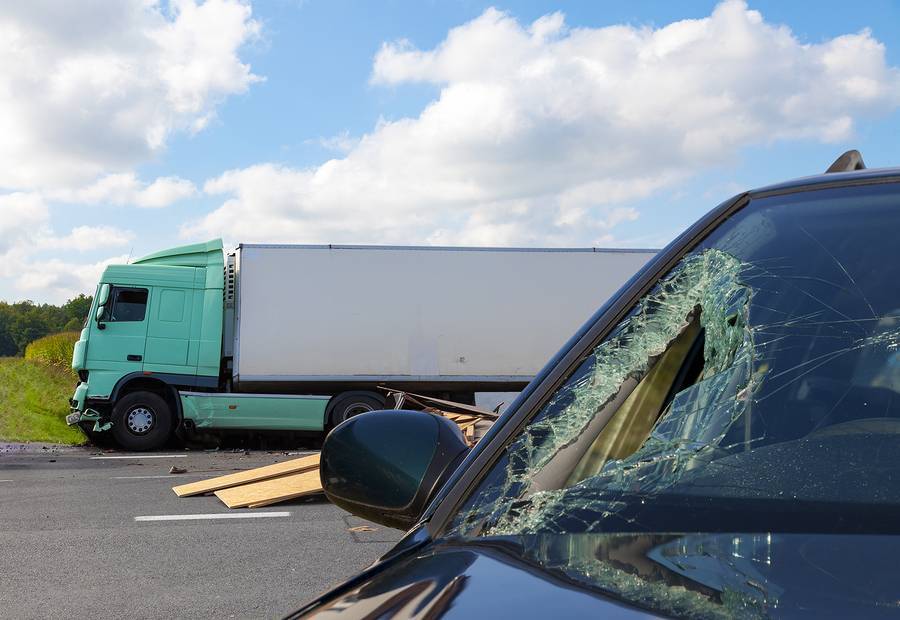
If you were injured in a truck accident in Riverside, California, one issue can have a major impact on the value of your claim: comparative fault. Under California’s pure comparative fault system, your damages are reduced by your percentage of fault, but you may still be entitled to compensation even if you were partially responsible for the collision. This issue is especially important in Riverside truck accident cases because trucking companies and insurers frequently argue that injured victims contributed to a crash. Every percentage of fault assigned to you can reduce the amount they may have to pay.
California Uses a Pure Comparative Fault System
California allows injured victims to recover damages even when they share responsibility for the crash. This differs from the laws in many other states, where an injured person may be barred from recovering any compensation if their share of fault reaches a certain percentage. In California, fault is divided among the parties involved in an accident, and your compensation is reduced by your share of fault.
Why Comparative Fault Is a Major Issue in Riverside Truck Accident Cases
Truck accident cases often involve severe injuries, substantial medical expenses, lost income, and significant pain and suffering. Because these claims can involve substantial damages, trucking companies have a strong incentive to shift blame to the injured victim.
This is particularly common in Riverside truck crash cases involving Interstate 215, State Route 60, State Route 91, and other heavily traveled commercial trucking routes throughout Riverside. Rather than accepting full responsibility, a trucking company may argue that your actions contributed to the collision. If that argument succeeds, the company’s financial exposure may be reduced.
Common Comparative Fault Arguments Raised by Trucking Companies
Trucking companies often rely on specific allegations to support a comparative fault defense. For example, they may argue that you violated California Vehicle Code § 22350, known as the Basic Speed Law, by driving at a speed that was not reasonable or prudent under existing conditions.
In other cases, they may claim you violated California Vehicle Code § 21703, which generally prohibits motorists from following another vehicle more closely than is reasonable and prudent. A truck driver may also claim that you changed lanes unexpectedly, failed to yield, ignored traffic conditions, or could have avoided the collision altogether. These arguments are frequently used to reduce compensation rather than eliminate liability entirely.
How Comparative Fault Can Affect a Riverside Truck Accident Settlement
Comparative fault directly impacts the value of a truck accident claim. Consider a Riverside truck accident victim whose damages total $2 million. If the trucking company convinces a jury that the victim was 20 percent responsible for the crash, the recovery may be reduced by $400,000. If the jury assigns 30 percent fault, the reduction may increase to $600,000.
Even a relatively small change in fault allocation can have a substantial effect on the final settlement or verdict. For that reason, disputes over fault percentages often become one of the most important issues in truck accident litigation.
Evidence Often Determines Comparative Fault
Comparative fault disputes are usually decided by evidence. In a Riverside truck accident case, the parties may rely on police reports, witness statements, surveillance footage, traffic camera footage, dash camera recordings, photographs, vehicle damage, accident reconstruction analysis, and electronic data from the truck.
This evidence may help establish how the collision occurred and whether the trucking company’s allegations are supported by the facts. In many cases, an early claim that an injured victim was partially responsible becomes much weaker after all available evidence is reviewed.
Multiple Defendants Can Make Fault Allocation More Important
Truck accident cases sometimes involve multiple responsible parties. Depending on the circumstances, liability may extend beyond the truck driver. When multiple defendants are involved, California Civil Code § 1431.2, commonly known as Proposition 51, may affect the allocation of non-economic damages such as pain and suffering. Because each defendant may be responsible for a different share of the damages, accurately determining fault can have a significant impact on the compensation you recover.
Do Not Assume Partial Fault Means You Cannot Recover Compensation
Many injured victims mistakenly believe they do not have a case if they made a mistake before the collision. California law does not require you to prove that you were completely free from blame. Instead, the focus is on each party’s share of responsibility for causing the crash. Even if you believe you may have contributed to the accident, you may still be entitled to recover substantial compensation. The key question is whether the trucking company is attempting to assign you more fault than the evidence actually supports.
Riverside Truck Accident Lawyer
The difference between recovering full compensation and losing a substantial portion of your Riverside truck accident claim may come down to whether a trucking company succeeds in shifting blame onto you. Law Offices of Samer Habbas & Associates has recovered more than $400 million for injury victims, including an $11 million truck accident recovery, and earned recognition from Best Lawyers, Super Lawyers, and America’s Top 100 High Stakes Litigators for results in high-value injury cases. Get Samer on Your Side. Contact Law Offices of Samer Habbas & Associates by calling (951) 444-5922 or contacting us online for a free consultation with a Riverside truck accident attorney.