






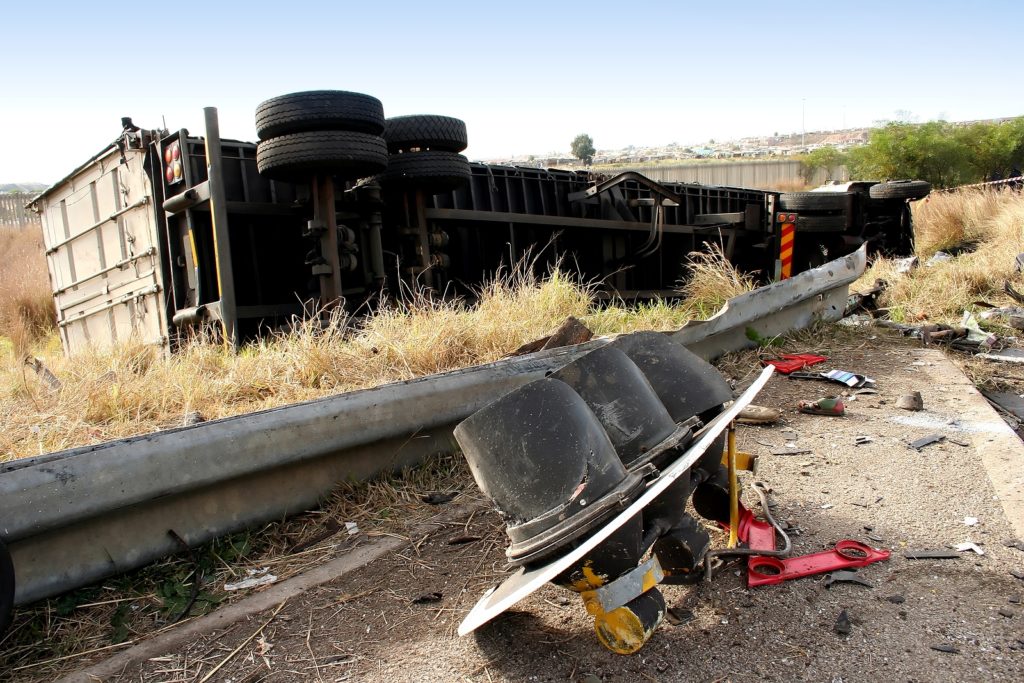
If you were injured in a truck accident in San Bernardino, Electronic Logging Device (ELD) data may be some of the most important evidence in your case. ELDs track a commercial driver’s duty status and driving activity, which can help determine whether the truck driver violated hours-of-service rules, drove while fatigued, or stayed behind the wheel longer than California law allows.
Unlike paper logbooks, ELDs automatically record information about a driver’s activity, creating a timeline of what happened before a collision. In many California truck accident cases, this data helps investigators determine whether fatigue, unsafe scheduling, or regulatory violations played a role in the crash.
California Laws Governing ELDs and Driver Logs
California directly regulates driver logs and ELDs through the California Code of Regulations. California Code of Regulations § 1213 governs Records of Duty Status. Covered drivers and motor carriers must maintain records showing when a driver is driving, on duty, off duty, or performing other work-related activities. California Code of Regulations § 1213.3 specifically governs electronic logging devices and addresses how electronic records must be created and maintained.
These regulations matter because ELD records often become critical evidence after a San Bernardino truck accident. If the records show that a driver exceeded allowable driving time or failed to obtain required rest, the data may help establish both the cause of the collision and whether safety rules were violated. When the records are missing, incomplete, or inconsistent, that can also become an important issue in the investigation.
California Hours-of-Service Rules
Hours-of-service violations are at the center of many ELD-related truck accident investigations. For many intrastate commercial drivers, California’s hours-of-service requirements are found in California Code of Regulations § 1212 and California Code of Regulations § 1212.5. These regulations limit the amount of time a driver may drive and remain on duty before taking required rest.
California Vehicle Code § 34501.2 authorizes the California Highway Patrol to adopt and enforce commercial motor vehicle safety regulations, including regulations governing driver hours and duty-status records.
When ELD data is reviewed after a crash, investigators can compare the driver’s actual activity against applicable hours-of-service requirements. If the records show that the driver exceeded legal limits, skipped required rest, or remained on duty too long, that evidence may support a claim that fatigue contributed to the collision.
How ELD Records Can Reveal Hours-of-Service Violations in San Bernardino
One of the most valuable aspects of ELD evidence is its ability to identify hours-of-service violations that may otherwise go undetected. The records can show when a truck was moving, how long the driver remained on duty, and whether required rest periods were taken. ELD data may also be compared with dispatch records, delivery schedules, GPS information, fuel receipts, toll records, and other evidence to determine whether the driver’s reported activity matches what actually occurred.
For example, an ELD may reveal that a driver continued operating after reaching allowable driving limits. It may show that required off-duty periods were not taken, or it may expose inconsistencies between electronic records and company documents. When ELD data conflicts with other records, investigators can often identify whether hours-of-service violations occurred before the crash and whether those violations help explain why the collision happened.
Missing, Altered, or Destroyed Records
In some truck accident cases, the problem is not what the ELD records show. The problem is what they do not show. Missing records, altered data, inaccurate duty-status entries, unexplained gaps in electronic records, or the destruction of ELD data after a crash may raise significant questions during an investigation. If ELD records appear incomplete or inconsistent, investigators may compare them with dispatch records, GPS data, fuel receipts, and other evidence to determine whether driving activity was properly documented.
Because ELDs are intended to create reliable records of driver activity, discrepancies may become important evidence when determining whether a driver or trucking company complied with applicable safety requirements. Missing or altered ELD records may also shift attention to the trucking company’s recordkeeping practices and whether important evidence was preserved after the crash.
How Trucking Companies May Be Connected to ELD Violations
ELD evidence often provides information about more than the driver’s conduct. Dispatch records, delivery schedules, internal communications, and ELD data may reveal whether a trucking company encouraged or allowed hours-of-service violations. If a company expected a driver to complete a route within an unrealistic timeframe, ELD evidence may help demonstrate whether compliance with applicable driving limits was possible.
In some cases, ELD records reveal repeated violations involving the same driver or company. Those patterns may help establish that the collision was not an isolated event but part of a broader failure to follow safety requirements. This type of evidence can be especially important when a San Bernardino truck crash appears to involve driver fatigue, rushed delivery demands, or ignored warning signs.
Protecting Evidence After a San Bernardino Truck Accident
ELD evidence is only valuable if it is preserved. After a truck accident, attorneys frequently move quickly to seek preservation of ELD records, duty-status records, dispatch communications, GPS data, and related electronic evidence. An attorney may help prevent the loss, alteration, or destruction of important information and allow investigators to reconstruct what occurred before the collision.
The sooner ELD records are secured, the easier it may be to determine whether hours-of-service violations contributed to the crash. Otherwise, important data may become harder to obtain, and the investigation may depend more heavily on incomplete records, witness statements, or documents controlled by the trucking company.
How ELD Evidence Can Strengthen a Truck Accident Claim
ELD records provide objective information about what a driver was doing before a crash. Rather than relying solely on witness testimony, investigators can examine electronic data showing driving activity, duty status, and compliance with hours-of-service requirements. When ELD records show that a driver exceeded allowable driving limits, skipped required rest periods, or operated longer than permitted, the evidence may help establish fatigue, negligence, and causation.
Combined with dispatch records, GPS data, and other evidence, ELD records can help connect a regulatory violation directly to the collision and resulting injuries. For that reason, ELD data is often among the most powerful forms of evidence in a California truck crash claim involving alleged hours-of-service violations.
San Bernardino Truck Accident Lawyer
Some truck accidents happen because a driver stayed on the road long after the law required them to stop. If hours-of-service violations contributed to your San Bernardino California truck accident, Law Offices of Samer Habbas & Associates can investigate the ELD records and other evidence needed to uncover what happened. The firm has recovered more than $400 million for injured clients and secured substantial results in serious truck accident cases. Contact Law Offices of Samer Habbas & Associates by calling (949) 264-5685 or contacting us online for a free consultation with a San Bernardino truck accident attorney. Get Samer on Your Side.